
ASBECO Executes Complex Distribution Center Upgrade
The Covid-19 pandemic was a catalyst for consumers to alter their purchasing habits at a scale never seen before. Today, aided by technology, consumers purchase all manner of goods both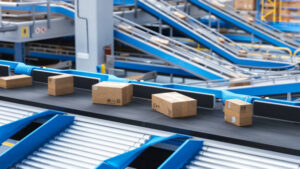 via traditional retailers’ performance-enhanced portals but also increasingly via direct to consumer (DTC) options that didn’t exist a decade ago.
This has forced delivery agents for retailers to reimagine how they operate at every level. Providers are an integral part of the DTC experience, and they are frequently the linchpin of success which defines a complete experience for consumers. This trend has challenged the capabilities of traditional logistics channels, forcing adaptations to handle smaller and more varied shipments. Technology has been pushed forward at a dizzying pace as both sellers and buyers require integrated inventory management and real time tracking. All these features combine to provide rapid, reliable deliveries that align with elevated customer expectations.
A robust infrastructure is required to handle the distribution, delivery, and customer service needs. The solution for final customer handoff requires more vehicles and other emerging options and software integrates with the entire chain in an increasingly interwoven way. Still, the heart of these operations remains distribution center (DC) solutions which process DC-to-DC transactions as well as providing the connection between distant shippers and the final consumers. One major domestic integrated freight provider has seen their revenue double to nearly 100 billion dollars in this decade and the resultant activity has forced them to adapt on the fly on a grand scale. In a perfect world, companies like theirs would simply build new DCs to support the new volume, however, this isn’t always possible. The prime real estate occupied by these facilities is highly valuable and increasingly difficult to obtain. Finding ways to do more within the footprint of existing buildings is critically important.
A parcel distribution hub which provides a primary point of connection into one of the largest cities in the US recently required major modifications to support the higher throughput. A conveyor integrator designed a solution which added dozens of conveyors covering over nine hundred linear feet within the same shell without adding new docks. This was the very definition of reconfiguration. The revised system used a combination of existing and new hardware to increase throughput and eliminate bottlenecks via the addition of new lanes, upgrades of the sorting systems, and strategic diverts.
The integrator turned to longtime partner ASBECO to develop the revised PLC solution and electrical installation for this challenging installation. ASBECO is a mechanical and electrical installation contractor based in Alpharetta, GA who has more than thirty years of experience installing material handling equipment throughout the US. Their company is certified by ISO and in both ISNetworld and Avetta and their crews are known as capable and dependable for this type of project. They frequently execute multiple large-scale implementations like this simultaneously.
ASBECO delivered a total of twenty-six new control and I/O panels which provided connectivity for the upgrade. This system will also serve as a foundation for future expansion and connecting the required management and tracking software. From there, ASBECO provided power and communication wiring for the revised conveyors’ layout and the associated scanners, eyes, diverts, pushers, and other related equipment. The controls plan, while intricate, was not the primary challenge of this upgrade. The fact that the facility needed to continue operating for the duration of the implementation was the test. What initially presented as a single upgrade project was executed in nearly thirty phases including preparation and pre-work while the facility was active, largely working between the chaotic sorting activities within the plant. Weekend shutdown work included strategic transfer to the new panels and the equipment associated with that panel or physical area. Their team masterfully handled the planning, preparation work, and commissioning of each phase as required to meet the overall project objectives. The result was a successful implementation which increased the throughput of the facility per the design with no workplace incidents and nearly zero interruption to the plant’s operation for the duration.
Integrated freight and logistics providers are now, and will continue to be, linked to the brand experience of many sellers. The speed of delivery, quality of performance in terms of both predictability and reliability, and efficient returns processes are not simple tasks; they are critical parts of the customer journey. Skilled material handling integrators will continue to adapt existing facilities and build new ones to support the increased activity. Aided by reliable installation contractors like ASBECO, the industry will continue to expand, and the experiences of consumers will positively evolve.